I'm going to say something that might sound harsh about Norway first, and then I'm going to tell you why Batumi made me feel better about food than anywhere I've eaten in years.
Back home, we've kind of given up on our own kitchen. Walk down any street in Oslo and you'll see the same thing — pizza place, sushi place, burger place, poke bowl, another pizza place. Our traditional food — the fårikål, the raspeball, the lutefisk, the pinnekjøtt — gets trotted out once a year at Christmas and then forgotten for the other 51 weeks. We've decided somewhere along the way that eating well means eating something from somewhere else.
Georgia does the opposite. Georgians are fiercely, proudly, loudly obsessed with their own food. They cook it at home, they argue about whose grandmother makes the best version, they serve it at every celebration, and they'll talk to you for twenty minutes about the right way to fold a khinkali. Walking into a Georgian restaurant feels like walking into someone's living room where dinner has been cooking for three days.
Batumi — on the Black Sea coast, in the Adjara region — is where this food culture meets the sea. And it's become one of my favourite cities to eat in anywhere in Europe.
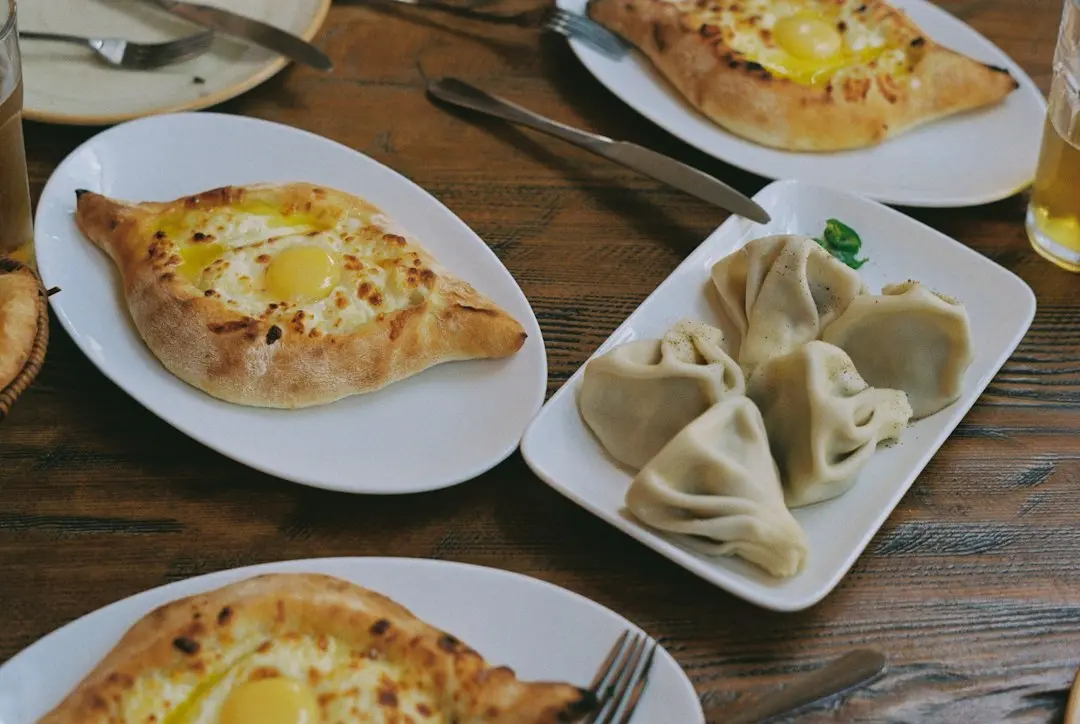
Start with the classics — the dishes Georgia is famous for
If you only try five things in Batumi, make it these. They're the backbone of Georgian cooking and you'll find them everywhere, from tiny family-run spots to the nicer restaurants along the promenade.
Khinkali — the dumpling that deserves its own religion
Khinkali are Georgian dumplings — twisted at the top, filled with spiced meat and hot broth, and eaten entirely by hand. You hold them by the little stem, bite a small hole in the side, drink the broth, and then eat the rest. The stem goes on the plate. It's not edible, and leaving it there is the correct way to count how many you've eaten.
Done badly, they're dense and heavy. Done well — and in Batumi, they're usually done well — they're juicy, fragrant with onion and herbs and pepper, and almost impossible to stop eating. You order five, then five more, then somehow a third plate.
My spot: Tavaduri. Order them plain, maybe with a glass of cold white wine, and take your time.
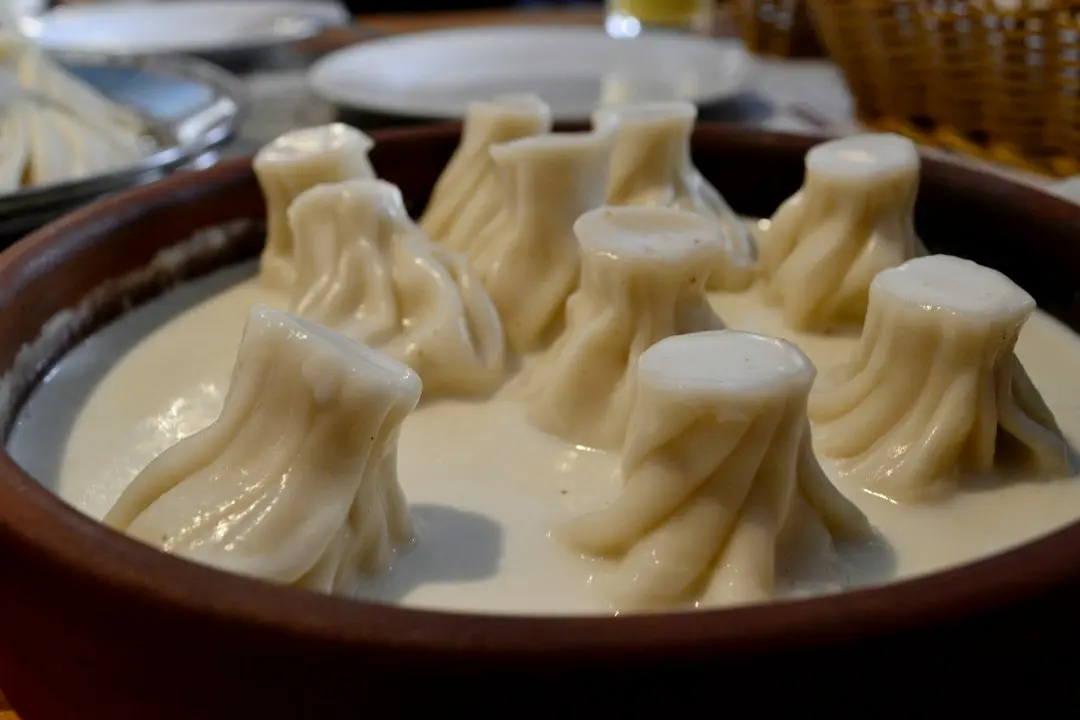
Where I send everyone for their first khinkali in Batumi. Family-run, unpretentious, and the dumplings are made by hand every morning.
- Address: Z. Gorgiladze St. 18, Batumi
- Hours: 11:00–23:00 daily
- Best for: Khinkali, simple Georgian classics, cold white wine
- Price: Roughly 30–50 lari for two with wine
There's a technique, and getting it wrong means losing the broth — which is the best part.
- Hold the dumpling by the twisted stem at the top. It's a handle, not food.
- Bite a small hole in the side and drink the broth first — carefully, it's hot.
- Eat the rest in one or two bites, then leave the stem on your plate.
- Count your stems at the end. It's how Georgians keep score.
Adjaruli Khachapuri — the most beautiful thing in Georgian cooking
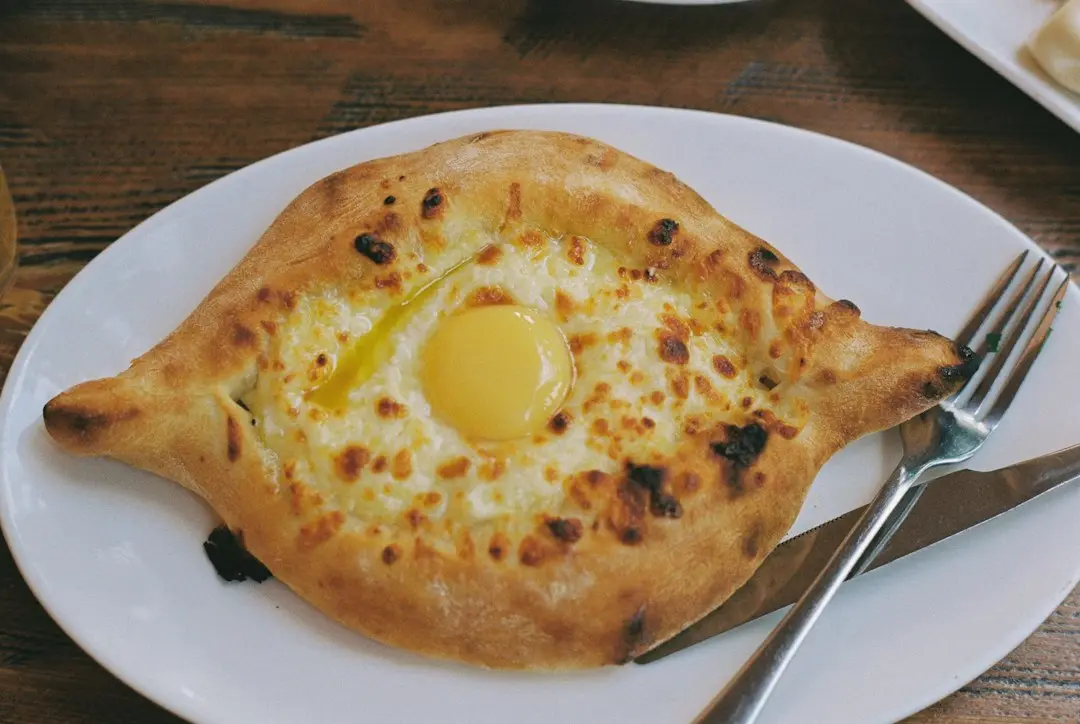
If Georgia has a national dish, this is probably it, and it's from Adjara specifically — which is the region Batumi is in. It arrives at your table shaped like a little boat. Inside the boat: molten cheese, a raw egg yolk, and a slab of butter. You stir it all together at the table with a fork until the yolk and butter melt into the cheese, then you tear off the crust and dip it in.
It's ridiculous. It's messy. It's one of the best things you'll ever eat. And you'll want to eat it more than once on your trip.
Where to get it: two good options. Laguna on Z. Gorgiladze Street (corner of 26 May Street) does an excellent version, and the location is great. But if you want to eat where locals eat, go to Mamukas Khachapuri on 26 May Street — it's my friend Lasha's favourite in the city, and he's a Batumi local.
Achma — the layered cousin of khachapuri
Achma is the less famous sibling of khachapuri, and honestly, sometimes I prefer it. It's built like a lasagna — layers of thin dough, cheese, butter, more dough, more cheese — baked until the top is golden and the inside is soft and rich. It's heavier than khachapuri, denser, and the kind of food that fixes a bad day.
Where to get it: Heart of Batumi. Regulars swear by it, and I understand why.
Sinori — the sweet, traditional Adjarian dish
Sinori is one of those dishes that has been made in Adjara for generations and is almost impossible to find outside the region. It's a layered dessert — thin sheets of dough, dried fruit, walnuts, and honey, baked and then served warm. In its traditional savoury form, it's made with cheese. The sweet version, which is what you'll find in Batumi, layers almond, honey, and dried fruit between crisp sheets of dough.
Where to get it: Bar Sinori on Marjanishvili Street. This is the place to try it — the bar is named after the dish and serves a version with almond, honey, and dry dough layers that's become a bit of a local institution. It's a gastro-bar as much as a restaurant, with 19 beer taps, 16 house-made infusions, live music most evenings, and a kitchen that stays open late.
A gastro-bar named after Adjara's most traditional sweet dish. Try the sinori — it's the reason to come.
- Address: 14 Marjanishvili St, Batumi
- Hours: 14:00–06:00 daily (kitchen until 01:30)
- Best for: Sinori, craft beer, cocktails, late-night atmosphere
- Price: 30–50 lari per person with drinks
Borano — soft cheese, egg, and butter, bubbling hot
Borano is an older, simpler dish — soft cheese baked with egg and butter, served straight from the oven, still bubbling. It's the kind of food you eat on a cool evening, with bread and a glass of red Saperavi, and it makes you feel like you're in someone's grandmother's kitchen.
Where to get it: Lumi on Rustaveli (19 Tavdadebul). Good setting, good food, good wine list.
The one Italian place worth making an exception for
Aromi Italiani — my favourite pizza in Batumi
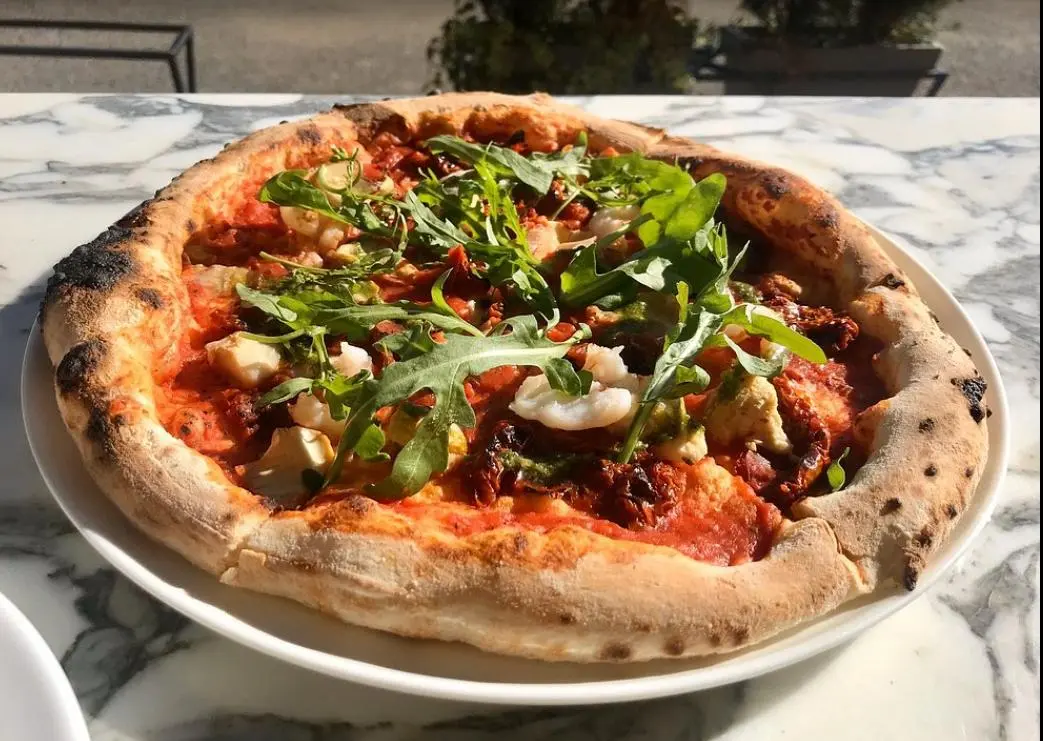
I promised this post was about Georgian food, and mostly it is. But Aromi Italiani deserves a mention, because it's genuinely excellent — thin crust, proper mozzarella, a wine list that doesn't punish you, and a location right on European Square where you can sit outside and watch the fountains while you eat.
It's not Georgian. It's Italian. But it's the kind of Italian that would survive in Naples, and the fact that you can eat it in Batumi for around 20 lari is almost absurd.
And one more: BK, the book-lined restaurant
I'm including this one because it surprised me. BK sits near European Square, on two floors, and the walls are lined with books. It feels more like a library that happens to serve food than a restaurant — the kind of place where you sit down for one thing and end up staying for hours.
On Friday evenings, they sometimes have live music. The menu is international — pasta, salads, grilled dishes — and prices are reasonable. I've had the Mushroom Chicken Fettuccine (25 lari) and it was genuinely good. Not the cheapest meal in Batumi, but a fair price for the quality and the atmosphere.
If you've had your fill of khinkali and khachapuri and want something more familiar, this is the place. And if you just want a cozy spot for a glass of wine and a plate of pasta, it's perfect.
A cozy, book-lined restaurant near European Square with live music some Friday evenings.
- Location: Near European Square, Batumi
- Best for: Pasta, relaxed dinners, wine, live music on Fridays
- Try: Mushroom Chicken Fettuccine (around 25 lari)
- Menu: View the full menu →
The one meal you absolutely should not miss: the fish market
If I could only send you to one place in Batumi, it would be the fish market. Not a restaurant. A market. You walk in, you look at what came off the boats that morning — red mullet, sea bass, turbot, whatever's fresh — you pick your fish, you agree a price, and you hand it to one of the kitchens at the back. Ten minutes later it comes back grilled, with lemon and herbs and bread.
You sit at a plastic table with a cold beer and eat the freshest fish of your life for a few lari.
This is what food is supposed to be. No menu, no marketing, no pretension — just fish, fire, and the sea a hundred metres away.
Batumi Fish Market — 27 Baku Street (near Gogebashvili Street). Open daily, roughly 10:00 to 22:00. Some stalls open earlier, and weekends often run until midnight.
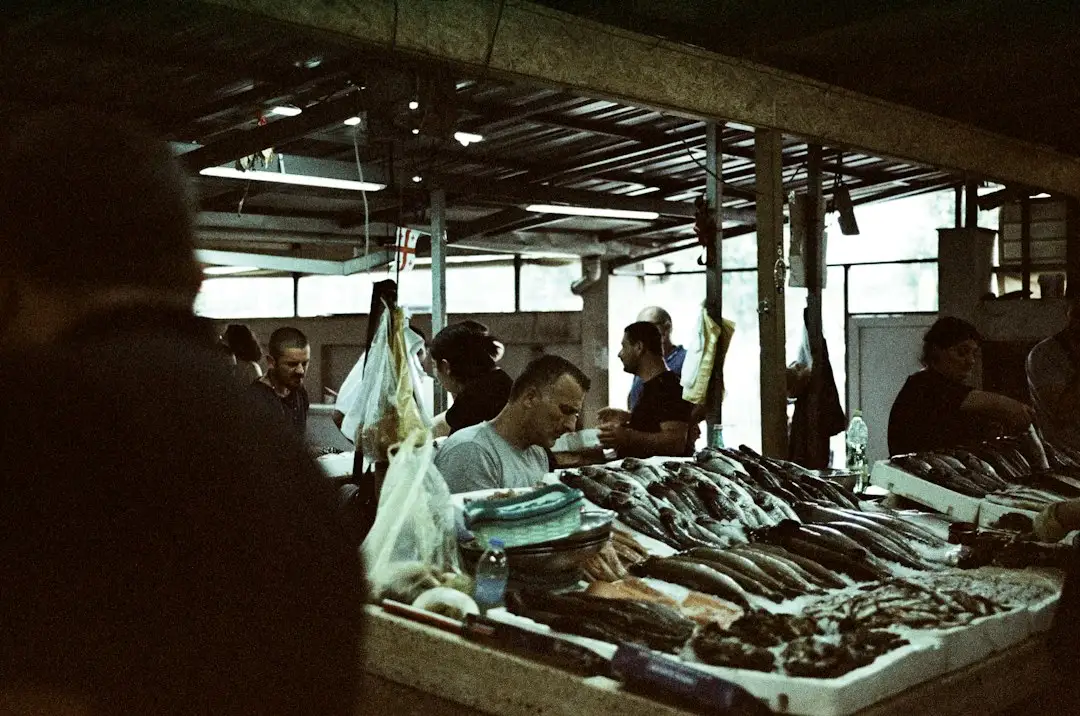
The fish market is technically open until late evening, but the good stuff — the fresh catch from the morning boats — is gone by early afternoon. If you show up at 20:00 expecting the full selection, you'll be disappointed.
Best time to go: 10:00 to 14:00, any day except Monday, when the boats often stay in.
The best meal in Batumi doesn't have a menu. It has a fish tank and a scale.
Why this food matters more than I expected
I went to Batumi expecting good food. What I didn't expect was how much it would make me think about Norway.
We've lost something. Not entirely — there are still people cooking properly at home, still chefs doing interesting things with Norwegian ingredients — but as a food culture, we've outsourced our dinner to Italy and Japan. Pizza and sushi on every corner. Salmon, which is ours, shipped to the world and eaten here mostly as a fillet in a supermarket tray. We've stopped being excited about our own kitchen.
Georgia hasn't. Georgians still treat food as the centre of life. Every meal is a small ceremony, every guest is fed until they physically cannot eat more, and every dish has a story attached to it. It's not nostalgia or performance — it's just how they live.
That's what makes eating in Batumi feel different from eating anywhere else I've been in Europe. It's not just the flavours — though the flavours are extraordinary. It's that the whole city still cares about food in a way that we've mostly forgotten.
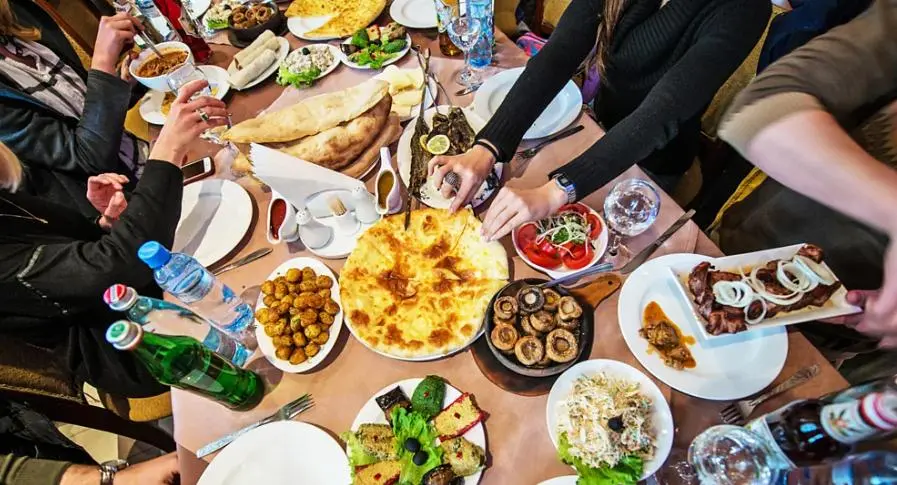
Georgia isn't just a country with wine — it's the birthplace of wine. Archaeologists have found winemaking evidence here dating back 8,000 years, making it the oldest wine culture on earth.
The traditional method uses qvevri — large clay vessels buried in the ground — and the results are unlike anything you've tasted from France or Italy. Order Saperavi if you like red, Tsinandali if you prefer white. Both are cheap, and both are excellent.
A glass in a good Batumi restaurant costs around 5–8 lari. A bottle at the table, rarely more than 30.
A few practical things
- Prices: A full meal with wine for two people rarely tops 60–80 lari (roughly 250–350 kroner). The fish market is even cheaper.
- Wine: Order Saperavi if you like red, Tsinandali if you prefer white. Georgian wine is older than French wine, and it's excellent — and cheap.
- Tipping: Not expected, but 10% is appreciated at nicer places.
- Portions: Extremely generous. Order less than you think you need, then order more if you're still hungry.
- Reservations: Not usually needed, except at Laguna and Aromi on weekend evenings.
- Vegetarian options: Plenty. Georgian cuisine has a deep tradition of vegetable, bean, and walnut dishes — lobio, pkhali, ajapsandali. You won't go hungry.
The bottom line
Georgian food is one of the reasons people fall in love with this country and keep coming back. It's not fancy. It's not plated with tweezers. It's just honest, generous cooking made by people who care about feeding you well.
Start with khinkali at Tavaduri. Get the Adjaruli khachapuri at Mamukas. Try the sinori at Bar Sinori. Have borano at Lumi on a cool evening. End your trip at the fish market. You'll come home talking about all of it — and probably looking at the pizza place on the corner of your street a little differently.
Quick reference: where to eat in Batumi
- Khinkali → Tavaduri
- Adjaruli khachapuri → Mamukas Khachapuri, 26 May Street
- Achma → Heart of Batumi
- Sinori → Bar Sinori, 14 Marjanishvili Street
- Borano → Lumi, Rustaveli 19 Tavdadebul
- Pizza → Aromi Italiani, European Square
- Pasta & wine → BK, near European Square
- Fresh fish → Batumi Fish Market, 27 Baku Street
Ready to visit Batumi?
We package flights, hotels, and transfers into one simple price. Seven nights in Batumi from 3,490 kr.
See packages →